Trade press and policy coverage have been amplifying a cluster of India textile stories: a USD 350 billion sector ambition by 2030–31, export aims near USD 100 billion, and a Budget 2026–27 sustainability package branded Tex-Eco (recycling infrastructure, water stewardship, decarbonisation, standards). Those figures are government and trade-press targets, not Weaverine forecasts — cite the sources below; do not treat them as our market model.
For a polyester home-textile mill selling into global programs, the useful signal is simpler: sustainability is being framed as market access and scale, not as a side CSR brochure.
What is actually on the record
- Union Textiles Minister Giriraj Singh has publicly tied higher scale and value-added manufacturing to the 100B export ambition (CII interaction coverage in trade press).
- Hindu Business Line’s fibre-to-future essay describes Tex-Eco pillars: resource recovery and recycling, water stewardship and decarbonisation, institutional standards, and innovation/digital enablement — alongside domestic-market and export targets quoted from the same policy conversation.
- PIB materials describe Tex-Eco as aligning domestic T&A production with international sustainability standards and green-market access.
Attention summaries of the same cluster (including Panipat-style recycling narratives) are useful as signals; shippable claims should lean on the press and ministry sources above.
What buyers should do with the signal
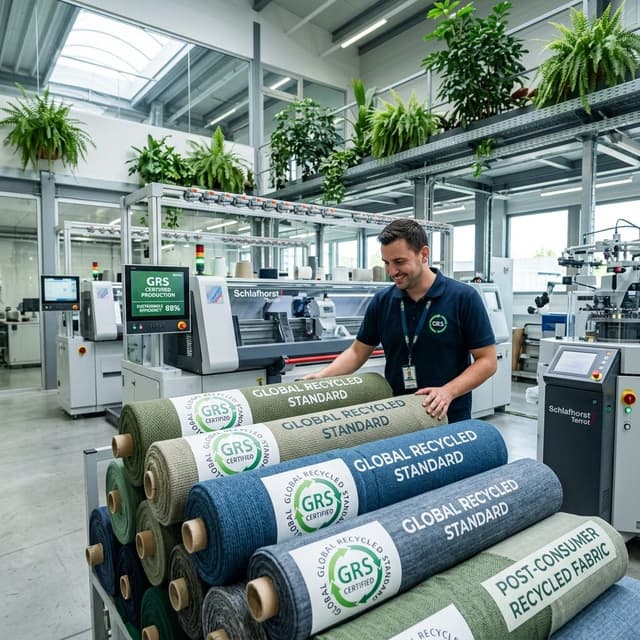
- Ask for chain-of-custody, not slogans. Recycled PET still needs GRS (or equivalent) paperwork if a hangtag will claim recycled content.
- Separate apparel fashion from home programs. India scale targets span the whole value chain; your RFQ still needs width, GSM, finish, and care tests for bedding and curtains.
- Compare virgin vs regenerated on landed value. Our cost comparison and regenerated polyester programs exist for that conversation.
- Treat parks and schemes as capacity context, not as a promise that every mill suddenly ships green stock tomorrow.
Weaverine angle
We already run virgin and regenerated polyester routes for home textiles. When a brand’s India or EU buyer starts asking about Tex-Eco-style expectations, bring the conversation back to sample routes + certificates + wash tests — the same discipline as any other sustainability claim.