The transition to sustainable textiles requires rigorous verification to ensure environmental claims are genuine. At Weaverine Textile, our Regenerated Polyester operations strictly adhere to the Global Recycled Standard (GRS), providing our global B2B partners with fully traceable, eco-friendly fabric solutions.
Understanding the GRS
The Global Recycled Standard (GRS) is an international, voluntary, full product standard that sets requirements for third-party certification of recycled content, chain of custody, social and environmental practices, and chemical restrictions.
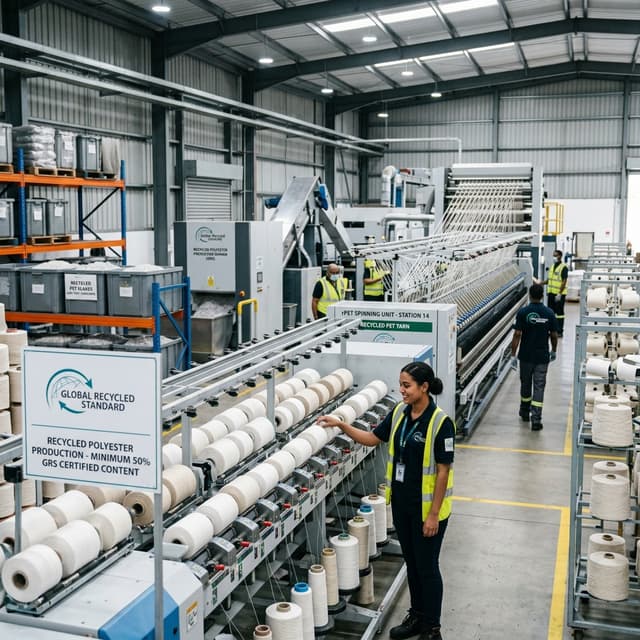
Our specialized lines for Regenerated Polyester ensure full compliance.
The purpose of the GRS is to drive higher percentages of recycled content in products and reduce harmful impacts of production. For a fabric mill like Weaverine Textile, this means implementing rigorous tracking systems from the raw material stage—often traced back to our PET bottle supply chain—all the way to the finished roll of fabric.
Key Compliance Areas
1. Recycled Content Verification
To carry the GRS logo, a product must contain at least 50% recycled content. At Weaverine Textile, our dedicated Regenerated Polyester lines often utilize 100% post-consumer recycled PET, ensuring maximum environmental benefit.
2. Supply Chain Traceability
Chain of custody is a critical component. Every batch of recycled yarn must be accompanied by Transaction Certificates (TCs) that verify its origin. We integrate these certificates seamlessly into our production management system, guaranteeing that our clients can confidently market their products as sustainable.
3. Environmental & Social Responsibility
GRS goes beyond material content; it mandates strict environmental management systems. This aligns perfectly with our modern facility in Anhui, where energy-efficient waterjet looms and advanced wastewater treatment systems minimize our ecological footprint. Furthermore, social compliance ensures fair labor practices across our operations.
Why This Matters for Brands
For home textile brands, sourcing GRS-certified fabrics is not just an ethical choice—it's a business imperative. As discussed in our analysis of brand perception in the EU market, consumers increasingly demand verified sustainability claims. Additionally, while the cost comparison with virgin polyester reveals subtle differences, the premium associated with verified sustainable products often justifies the investment.
Weaverine's certification status: what buyers should still verify
Weaverine (Anhui Wurun Textile Co., Ltd.) secured GRS certification, and our dedicated regenerated polyester lines often run 100% post-consumer PET. Certification matters, but still review the full commercial and technical picture before moving forward:
- whether the certified entity matches the quoting and contracting entity
- how chain-of-custody documentation (TCs) will be handled for the specific program
- whether the greige base and finishing route fit the target end use (see regenerated polyester greige)
- what MOQ, sampling, and delivery terms apply to the exact construction