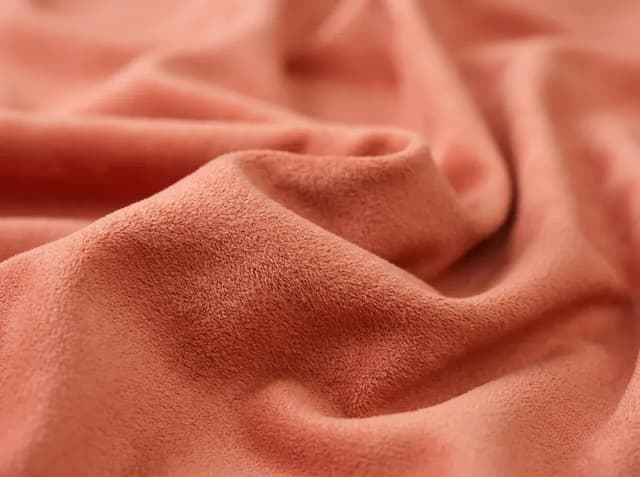
In B2B home-textile sourcing, few terms cause more confusion between overseas buyers and Asian mills than "washed cotton" (水洗棉). When a private-label bedding brand asks for a relaxed, matte, casually rumpled duvet cover, mills frequently quote two completely different products under similar names:
- Natural Enzyme-Washed 100% Cotton (
100% Cotton): Woven from combed staple cotton (32sor40s Neplain weave) and garment- or piece-washed in cellulase enzymes to soften the hand. - Washed-Cotton Finish on 100% Polyester (
100% Polyester Microfiber): Woven from ultra-fine continuous-filament polyester (75D/72For75D/144F) on waterjet looms, lightly micro-sanded (peachskin), and processed through high-temperature overflow relaxation jets and tumble dryers to create a permanent, breathable cotton-linen crinkle.
Understanding the engineering, labeling, and cost differences between the two lets bedding buyers capture the "lived-in" aesthetic at a fraction of natural linen or washed-cotton cost—without mislabeling fiber content.
Side-by-side comparison: Washed-Cotton Finish Polyester vs Natural Washed Cotton vs Standard Peachskin
| Specification Parameter | Washed-Cotton Finish (100% Polyester) | Natural Enzyme-Washed Cotton (100% Cotton) | Standard Flat Peachskin (100% Polyester) |
|---|---|---|---|
| Legal Fiber Composition | 100% Polyester (must be labeled 100% Polyester under FTC/EU rules) | 100% Cotton | 100% Polyester |
| Typical Yarn Construction | 75D/72F or 75D/144F × 150D/144F (0.52–1.04 DPF micro-filament) | 40s × 40s (133×72 or 128×68) ring-spun combed cotton | 75D/72F × 75D/72F or 150D/144F |
| Finishing Route | Light diamond peaching + HT overflow jet relaxation + air-tumble crinkle + relaxed stenter setting | Desizing + bleaching + reactive dyeing + cellulase enzyme bath + tumble wash | Diamond-emery sanding + flat tension stenter heat-setting |
| Surface Visual & Hand Feel | Matte, organic micro-crinkle ("lived-in" cotton/linen look), zero synthetic shine | Matte, soft, slightly rumpled natural cotton hand | Flat, smooth, uniform micro-velvet suede nap |
| Finished GSM Range | 85 – 120 GSM (core bedding tier: 90–105 GSM) | 115 – 145 GSM | 75 – 120 GSM |
Laundry Shrinkage (ISO 6330) | < 3% (typically -1.0% to -2.0% after heat-setting) | 3% – 5% (higher if tumble-dried hot) | < 3% |
Color Fastness to Washing (ISO 105-C06) | Grade 4–5 (HT disperse dyeing) | Grade 3–4 (dark reactive shades fade faster over 30 washes) | Grade 4–5 (disperse dyed/printed) |
Pilling Resistance (ISO 12945-2, 2,000 rev) | Grade 3.5 – 4.0 | Grade 3.0 – 4.0 | Grade 3.5 – 4.0 |
| Relative FOB Fabric Cost per m² | 1.0× (Baseline value) | 2.2× – 3.0× | 0.9× – 0.95× |
(For a broader comparison of the two base fibers across all weave structures, see our Polyester vs Cotton guide).
How the mill creates the "washed-cotton" crinkle on 100% polyester
Standard polyester filament emerging from a waterjet loom feels slick, flat, and slightly lustrous. Turning that base cloth into a matte, cotton-hand duvet shell requires a four-stage mechanical and thermal sequence:
- Full-Dull (FD) or Semi-Dull (SD) Micro-Filament Base: Instead of bright trilobal yarns, the mill warps Full-Dull (FD) or Semi-Dull (SD)
75D/72For75D/144Fyarns infused with titanium dioxide () delusterant to eliminate plastic specular glare before finishing even begins (check filament fineness with the Denier & DPF Calculator). - Fine-Grit Double-Face Diamond Peaching: High-mesh diamond-emery rollers lightly buff both faces of the fabric to break surface filament stiffness without raising a heavy winter fleece nap.
- High-Temperature Overflow Relaxation & Rope Tumbling: Rather than holding the cloth under tight widthwise tension, the fabric is processed in a high-temperature overflow jet and rotary air-tumbler. Controlled weft contraction (
8%–12%from loom-state greige width) lets the yarns crimp three-dimensionally, creating the signature pebble-crinkle texture (model the resulting GSM increase using our Greige-to-Finished Shrinkage & GSM Calculator). - Overfed Stenter Heat-Setting (180–195 °C): Finally, the cloth passes through a pin stenter with positive warp overfeed so the organic crinkle is thermally locked into the polymer memory without flattening the grain—delivering
<3%dimensional stability.
Compliance guardrail: FTC and EU Textile Regulation labeling
If you sell into North America, the European Union, the UK, or Australia, your merchandising and compliance teams must separate process naming from fiber-content labeling:
- Care & Composition Sew-In Label: Must state
100% Polyester(never"100% Washed Cotton"or"Poly-Cotton"). - E-Commerce & Packaging Copy: Use accurate descriptive phrasing such as "Washed-Cotton Touch Microfiber", "Crinkle-Washed Microfiber Duvet Set", or "Enzyme-Washed Feel 100% Polyester" so consumers understand the tactile aesthetic while fiber disclosure remains 100% compliant.
B2B RFQ checklist for washed-cotton finish polyester
When requesting swatches or pricing from sales@weaverine.com or via /chat, include:
- Target finished GSM & crinkle intensity: e.g.,
95 GSMor105 GSM ± 4 GSM, specifyinglight matte crinklevspronounced tumble-crinkle(send a physical hand-feel benchmark if matching an existing program). - Yarn luster & DPF: Specify
Semi-Dull (SD)orFull-Dull (FD)75D/72For75D/144Fmicrofiber. - Usable finished width: 150 cm to 315 cm (choose
280 cmor300 cmfor seamless King/Cal-King duvet shells and sheet sets). - Colouration & certification: Solid HT disperse dyed (MOQ 3,000 m/color, wash fastness Grade 4–5), digital print (no MOQ), or rotary print (5,000 m), with OEKO-TEX Standard 100 or GRS Transaction Certificate options.