Poplin
A balanced plain weave with a fine warp and a heavier weft, giving a smooth, slightly ribbed face that is stronger than its weight suggests.
Weaverine weaves plain-weave polyester on 650+ waterjet looms at 160–330 cm and 55–120 GSM, and poplin is a construction choice within that range rather than a different mill.
By Wren Thunderborn, Head of Content
Also known as: poplin fabric · poplin weave · poplin cloth · polyester poplin +6
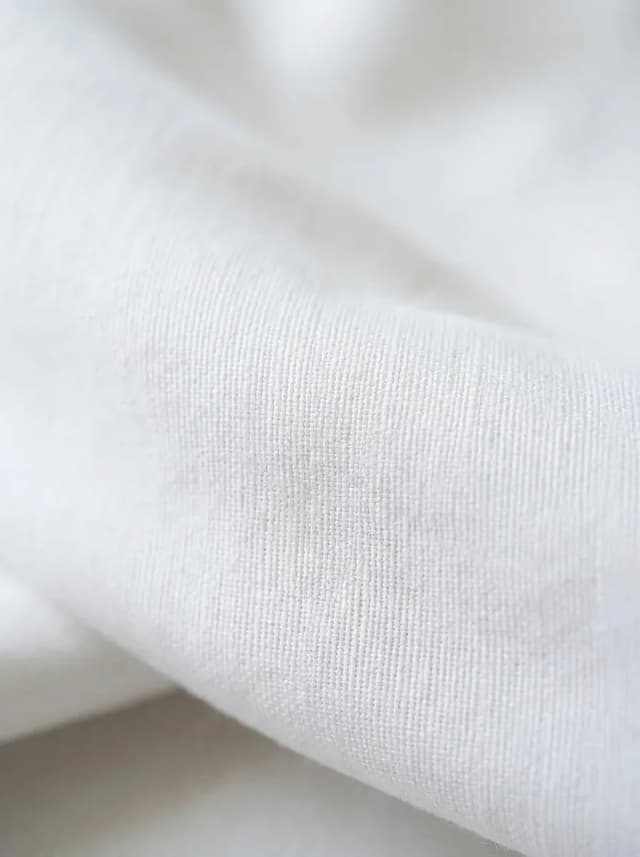
Poplin is a plain weave with an uneven yarn count: a fine warp and a heavier weft. The interlacement is the ordinary 1/1 — one thread over, one under — so the structure is not what makes poplin. The yarn ratio is.
That imbalance is why the cloth reads smooth rather than gridded. The fine warp is set close enough to dominate the face, and the heavier weft sits slightly proud of it, producing the faint crosswise rib that identifies a poplin from a metre away.
What makes a poplin a poplin
| Property | Poplin | Ordinary plain weave |
|---|---|---|
| Interlacement | 1/1 plain | 1/1 plain |
| Warp vs weft yarn | Fine warp, heavier weft | Similar counts both ways |
| Face | Smooth, fine lengthwise rib | Visible over-under grid |
| Hand | Crisp, dry | Varies with weight and sett |
| Trade name follows | The yarn ratio | Weight, sett and end use |
The practical consequence: a supplier can weave a perfectly good plain weave and it will not be poplin, because the weft was not heavier than the warp. When a buyer specifies "poplin" without counts, the mill has to guess, and the guess is what the sample approval settles.
Poplin against its neighbours
| Cloth | Structure | Where it differs |
|---|---|---|
| Poplin | Plain, fine warp / heavy weft | The ribbed face and crisp hand |
| Broadcloth | Plain, finer warp | Heavier and denser, softer hand |
| Twill | 2/1 or 3/1 diagonal | A diagonal line, not a rib; more drape |
| Plain weave | 1/1, similar counts | The grid face, no rib |
| Taffeta | Plain, fine both ways, dense | Crisper and lighter, a lining cloth |
The names overlap in the trade, and the overlap is a real sourcing hazard: two suppliers can both ship "poplin" and the cloths can differ in sett, weight and hand. The specification, not the name, is what an order is held to.
Poplin on a polyester base
On polyester the construction behaves in ways cotton poplin does not:
- It does not hold water. The fibre is hydrophobic, so a washed polyester poplin releases moisture quickly rather than drying slowly the way a cotton poplin does.
- It takes a print cleanly. A smooth, closely set plain face is a good substrate for rotary or digital print.
- It resists creasing. Polyester poplin recovers from folding better than cotton, which matters for hospitality bedding that is folded and stacked.
Those are properties of the fibre, not of the weave, and they are worth keeping separate when a spec is written: poplin describes the construction, polyester describes the polymer, and a buyer usually needs both.
What to specify
A poplin order that can be quoted without a sample round trip carries:
- The yarn counts in both directions — this is the defining feature, and without it "poplin" is ambiguous.
- The sett — ends and picks per centimetre, because the rib depends on the warp being closely set.
- The GSM — the construction does not fix a weight.
- The width — 160–330 cm covers most home-textile programmes; shirting runs narrower.
- The fibre — 100% polyester, or the blend stated, since the drying and creasing behaviour follows the fibre.
On Weaverine programmes the plain-weave base is woven at 160–330 cm and 55–120 GSM on 650+ waterjet looms, and poplin is a construction within that range rather than a separate line. For the stock base see greige polyester; for the broader structure see plain weave.
Common questions
What is poplin fabric?
- Poplin is a plain weave, so every warp thread passes over one weft and under the next, but with a fine yarn in the warp and a heavier yarn in the weft. That imbalance gives a cloth with fine, close-set lengthwise ribs and a smooth face. It is the same 1/1 interlacement as a basic plain weave; what makes it poplin is the yarn count difference between the two directions.
Is poplin the same as plain weave?
- Poplin is a plain weave, but not every plain weave is a poplin. The structure is identical — one up, one down — and the trade name depends on the yarn ratio: a fine warp with a heavier weft. A plain weave with similar yarns in both directions is sheeting, taffeta or broadcloth depending on weight and sett, not poplin.
What is the difference between poplin and broadcloth?
- They are close relatives and the names are used loosely. Both are plain weaves with a finer warp. Broadcloth tends to be a heavier, denser cloth with a softer hand, used for shirting and formal wear; poplin is lighter with a crisper, more pronounced rib. Where a buyer specifies one, the sett and GSM should be written into the order, because the names alone do not fix the construction.
Is polyester poplin suitable for bedding?
- Yes. Poplin sheeting is an established bedding construction: the fine warp gives a smooth hand and the plain interlacement is stable through washing. On a polyester base the cloth also sheds water rather than absorbing it, which is why poplin appears in hospitality bedding where turnaround time matters.
What GSM is poplin fabric?
- It depends on the end use rather than the name. Shirting poplin is typically lighter than bedding poplin, and a polyester home-textile poplin sits comfortably in the 55–120 GSM range our looms run. Specify the GSM and the width with the construction, because poplin is a structural description and does not fix a weight.
Why does poplin feel smooth?
- The fine warp is set closely enough that the surface is dominated by the smooth warp yarns, while the heavier weft is largely hidden. That is what produces the poplin hand: a smooth face with a faint crosswise rib rather than the visible over-under grid of a coarser plain weave.
See Our Offers
Related Terms
Sourcing poplin or a polyester equivalent? We quote mill-direct programs from 5,000 m per specification.
New to textile terms?
Browse the full glossaryPolyester home-textile fabric, woven mill-direct for buyers worldwide.
Our mills run 650+ waterjet looms and produce 73M+ meters annually for bedding, curtain, and upholstery fabric programs.