Viscose
A regenerated cellulosic fiber spun from wood pulp—the most common rayon process. Weaverine does not spin cellulosics; polyester buyers usually spec microfiber or moisture-wicking finish instead.
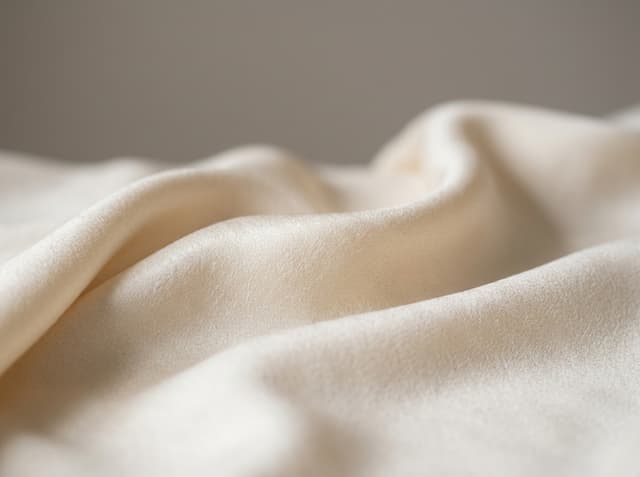
Viscose fabric starts as wood pulp regenerated into cellulosic fiber through chemical spinning. It is the most common production route behind the word rayon, so buyers use the two names for the same family: fluid drape, soft silk-like hand, vivid dye uptake. Apparel linings and summer goods specify it for drape; home textiles meet it in linings and blended grounds.
The newer sibling is lyocell: same wood-pulp starting point, closed-loop solvent spinning instead of the older chemistry. Polyester starts somewhere else entirely—PET polymer, melt-spun—which is why dye chemistry, moisture behavior, and care labels all change when a program crosses from cellulosic to synthetic.
Weaverine does not spin cellulosics. The operation is 100% polyester flat-woven cloth on 650+ waterjets, so viscose and rayon programs have no home here. Polyester answers for the same buying jobs are microfiber for silky drape, softener finish for hand, and moisture-wicking treatment where the brief is cool-dry wear. Name drape, hand, or certification as the driver and approve the polyester route on a sample—custom programs from 5,000 m.
Common questions
What is viscose fabric?
- Viscose is a regenerated cellulosic fiber spun from wood pulp through a chemical process. It drapes fluidly with a soft, silk-like hand and takes dye vividly—which is why apparel and linings specify it.
Is viscose the same as rayon?
- Viscose is the most common way rayon is made, so the trade uses the words almost interchangeably. Lyocell is the newer closed-loop cellulosic sibling; all three start from wood pulp, unlike polyester which starts from PET.
Does Weaverine weave viscose or rayon?
- No. Regenerated cellulosics need pulp-dissolving and chemical-spinning lines the mill does not run; Weaverine weaves 100% polyester on waterjets. Buyers chasing fluid drape usually approve microfiber, softener finish, or moisture-wicking polyester on a sample instead.
Related Terms
Sourcing viscose or a polyester equivalent? We quote mill-direct programs from 5,000 m per specification.
Want to learn more textile terms?
Browse the full glossaryPolyester home-textile fabric, woven mill-direct for buyers worldwide.
Our mills run 650+ waterjet looms and produce 73M+ meters annually for bedding, curtain, and upholstery fabric programs.