Polyester Fiber
A synthetic fiber spun from PET polymer, woven by Weaverine on waterjet looms into 100% polyester home-textile cloth.
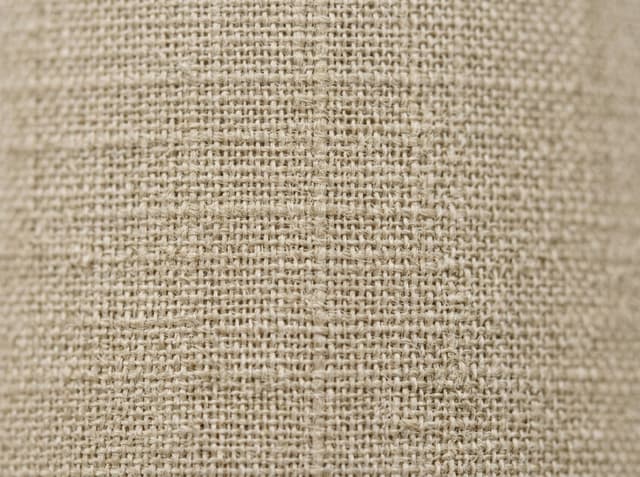
Polyester fiber is a synthetic fiber spun from PET polymer. It is the only fiber Weaverine weaves: 100% polyester cloth for bedding, curtains, and upholstery, produced on 650+ waterjet looms. Fiber choice sets everything downstream—dye chemistry (disperse), print route, and which finishes take evenly.
Filament yarns are continuous strands that read smooth and lustrous; staple yarns are cut short and spun, reading softer and more cotton-like. Denier names the yarn size; microfiber is polyester under roughly 1 denier. Name filament or staple plus denier on the RFQ—“polyester” alone does not define hand or performance.
1/1 Plain Weave — the workhorse construction
Every warp passes over one weft, under the next. Maximum yarn lock for taffeta, pongee, and peachskin base cloths.
Dark = warp on the face. Light = weft on the face.
Spun yarn vs filament yarn: how to choose
When sourcing polyester wovens, the choice between filament and spun yarn determines both physical performance and aesthetics:
| Parameter | Filament Polyester Yarn (FDY / DTY) | Spun Polyester Yarn (Staple) |
|---|---|---|
| Yarn Structure | Continuous, unbroken filaments extruded from spinnerets | Short staple fibers (38–51 mm) carded and twisted into yarn |
| Surface & Hand | Smooth, sleek, cool-touch, subtle or high luster | Fuzzy, warm, soft-touch, matte imitation-cotton hand |
| Tensile Strength | Significantly higher tensile and tear strength per denier | Lower tensile strength; relies on twist for cohesion |
| Pilling Resistance | Excellent (fibers cannot easily migrate to surface) | Prone to slight surface fuzz and pilling over repeated washings |
| Loom Efficiency | Ideal for high-speed waterjet looms (hydrophobic, low lint) | Typically woven on airjet or rapier looms; higher lint generation |
| Common Products | Taffeta, Pongee, blackout lining, curtain sheer | Faux-linen drapery, imitation-cotton sheeting, workwear twill |
Loom-state greige runs 160–330 cm at 55–120 GSM in plain and twill; finished cloth runs 150–315 cm at 60–140 GSM. Stock greige specs carry no minimum; custom greige programs start at 5,000 m. Small woven figures and satin stripe run on a dobby attachment on the same waterjets.
Buyers with sustainability scope use recycled polyester from the same PET chemistry with GRS chain-of-custody. For soft-hand programs see peachskin; for cotton-like hands without leaving polyester see washed cotton.
Common questions
What is polyester fiber?
- Polyester fiber is a synthetic fiber spun from PET polymer. Weaverine weaves it on 650+ waterjet looms into 100% polyester cloth for bedding, curtains, and upholstery.
Spun yarn vs filament yarn: what is the difference in polyester?
- Filament polyester consists of continuous unbroken strands (like FDY or DTY) that produce a smooth, high-tenacity, lustrous cloth with zero lint. Spun polyester is made by cutting filaments into short staple fibers (38–51 mm) and twisting them together like cotton, producing a soft, matte, cotton-like hand.
What is polyester, and is it the same as polyester fiber?
- Polyester is a family of synthetic polymers, most commonly PET, spun into fiber and yarn for textiles. Polyester fiber is that polymer in fiber form; Weaverine weaves it on 650+ waterjet looms into 100% polyester cloth for bedding, curtains, and upholstery.
Filament or staple: which polyester yarn for home textiles?
- Filament yarns read smoother and more lustrous; staple-spun yarns read softer and more cotton-like. Name filament or staple plus denier on the RFQ, not only polyester.
What widths and weights does Weaverine weave?
- Loom-state greige runs 160–330 cm at 55–120 GSM in plain and twill; finished cloth runs 150–315 cm at 60–140 GSM. Custom greige programs start at 5,000 m; stock specs have no minimum.
Is polyester stretchy?
- Standard woven polyester has little inherent stretch—the give buyers feel comes from elastane/spandex blends (e.g. 95 polyester 5 elastane) or knit construction, not the polyester itself. Name the blend ratio and construction on the RFQ; Weaverine home-textile programs are 100% polyester woven cloth unless a blend is specified.
What is terylene fabric?
- Terylene is an early trade name for polyester (PET) fiber and cloth—same chemistry as modern polyester, different era of branding. Terylene fabric, dacron material, and polyester textiles all resolve to PET-based cloth; write PET, filament or staple, denier, and construction on the RFQ rather than the vintage name.
Rayon vs polyester: which should a home-textile program choose?
- Rayon is soft, breathable, and absorbent but wrinkles, shrinks, and tears more readily; polyester is durable, wrinkle-resistant, quick-drying, and holds shape, but breathes less and can cling. For bedding and curtains that must survive repeated washing, polyester wins on durability and easy care—compare hand, absorbency, shrinkage, and care on samples of both before committing.
How do you wash and care for polyester bedding?
- Machine wash 30–40°C with mild detergent, no bleach; tumble low or line dry—polyester dries fast. Skip high heat (yellowing, shape loss) and treat oil stains promptly, since synthetics bond oils. No moth protection or humidity control needed for storage; keep out of prolonged direct sun to slow UV fade.
Related Terms
Sourcing polyester fiber or a polyester equivalent? We quote mill-direct programs from 5,000 m per specification.
Want to learn more textile terms?
Browse the full glossaryPolyester home-textile fabric, woven mill-direct for buyers worldwide.
Our mills run 650+ waterjet looms and produce 73M+ meters annually for bedding, curtain, and upholstery fabric programs.