Chiffon is a plain weave, so the construction is within a weaving mill's capability. What limits it is weight: the lightest chiffon sits below the greige band this mill weaves.
Chiffon
A very light, sheer plain-weave cloth woven from hard-twisted yarns. The high twist gives the slightly grainy hand and the fluid drape; the plain ground is why a waterjet mill can weave the construction, though the lightest fashion weights sit below its loom floor.
By Wren Thunderborn, Head of Content
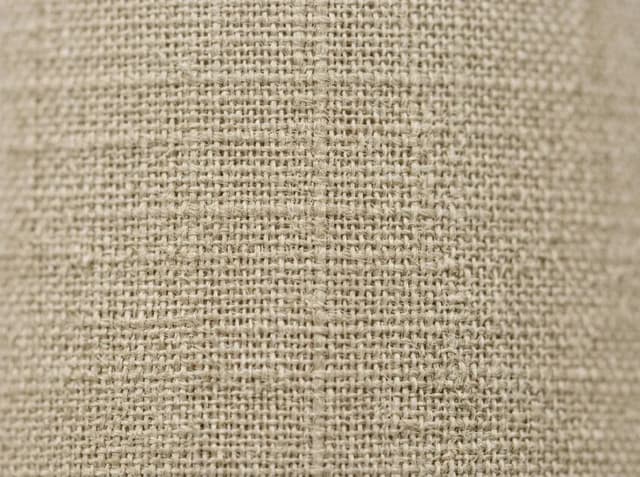
Chiffon is a plain weave — a very light one, made from hard-twisted yarn. Two facts follow, and they decide what a mill can honestly say. Because it is plain, the construction is ordinary: warp and weft cross at right angles on any loom. Because it is 30–80 GSM, much of it sits below the weight band a home-textile mill weaves.
So this is not the fleece case. Chiffon is in the weaving world; the question is whether a given weight is orderable, and this page gives the threshold.
What the twist does
The defining feature of chiffon is not the fibre and not the weave plan — it is how hard the yarn is twisted.
- High twist per metre makes the yarn want to kink and coil. Once woven, that stored energy gives the cloth its faintly grainy, crepe-like surface.
- The same energy gives the drape. Chiffon falls and flows rather than holding a shape, which is the whole reason it is chosen for overlays and eveningwear.
- And it gives a little bias stretch, unusual in a woven cloth, which is also why it shifts under a needle.
A soft-twist plain weave at the same weight is a voile (see plain weave) — smooth, matte, no crepe. Same loom, same weave, entirely different cloth. The yarn specification is the product.
Chiffon vs georgette vs voile
The three are confused constantly, and a purchase order usually needs only one of them:
| Cloth | Twist | Typical weight | Hand |
|---|---|---|---|
| Chiffon | Hard (crepe) twist | 30–80 GSM | Sheer, smooth-ish, fluid, grainy edge |
| Georgette | Harder twist | 40–100 GSM | Drier, more pronounced crepe, less sheer |
| Voile | Soft twist | 60–120 GSM | Smooth, matte, crisp, no crepe |
They are separated by twist and weight, not by the name. That is worth writing down, because "chiffon" on its own tells a mill nothing it can test.
Fibre: silk, polyester, nylon
Silk chiffon is the original and still the reference for hand. Polyester chiffon is the volume product: it holds a crepe twist well, dyes brightly with disperse dyeing, and costs a fraction. Nylon and viscose chiffon also exist, each with its own lustre and care story.
What changes with the fibre is the lustre, the drape and the washing — not the construction. All of them are plain-weave hard-twist sheers, and that is why the denier and the twist on the yarn specification matter more than the fibre name.
The weight boundary — what a mill can and cannot quote
This is the part an affiliate blog will not tell you, and it is the part that decides whether a programme is orderable.
| Weight | What it is | Orderable here? |
|---|---|---|
| 30–50 GSM | Fashion chiffon, silk end of the band | No. Below this mill's greige floor of 55 GSM |
| 55–80 GSM | Heavier chiffon / georgette, sheer curtains, hijab-weight | Yes. Inside the greige band, woven on the same looms |
| 80–120 GSM | Chiffon-weight is past; this is voile and light curtain cloth | Yes — the mill's core sheer range |
The line that makes this page useful: the construction is not the limit; the weight is. A buyer specifying 45 GSM chiffon is specifying a cloth this mill cannot weave, and should be told so on the first call rather than after a sample.
What chiffon is bought for
- Eveningwear and overlays — the classic use, where the drape does the work.
- Scarves, stoles and hijab/abaya weight — the largest volume segment, and the one closest to a home-textile mill's range at 55–80 GSM.
- Sheer curtains — as voile or chiffon-weight sheer, where the cloth filters light without blocking it.
- Lightweight linings — where a slippery, low-friction inner face matters.
What goes on the order
- The weight in GSM, and whether it is greige or finished — the single number that decides whether the cloth is orderable.
- The twist, in turns per metre, and the yarn denier — this is what makes it chiffon rather than voile.
- The fibre — 100% polyester, or the blend, with the dye route that follows from it.
- Width, greige and cuttable finished, if the end use is a curtain panel.
- The hand — crisp or soft — because a crepe twist can be finished either way.
- The end use, because a hijab weight and a curtain sheer are specified differently even at the same GSM.
What this mill does
This mill weaves 100% polyester on more than 650 waterjet looms — greige at 55–120 GSM and 160–330 cm, finished at 60–140 GSM and 150–315 cm, above 200,000 m/day. Plain weave is the base construction of the whole range: taffeta, pongee and the sheer weight at the bottom of the band.
The honest position on chiffon:
- The construction, yes. A plain-weave hard-twist sheer at 55–80 GSM is inside the greige band, and the crepe twist is a yarn purchase, not something the mill spins — so it is specified on the yarn order.
- The lightest fashion weights, no. Below 55 GSM the cloth is under the loom floor, and that is a machine limit rather than a preference.
- The nearest orderable neighbours are the sheer end of pongee and a light plain weave for curtains, both at 55–80 GSM.
Stock greige carries no minimum; custom greige starts at 5,000 m and piece dyeing at 3,000 m per colour. For a programme question with the weight and end use in hand, request a quote. For the base cloth every programme starts from, see greige fabric, and for how the weight is measured, GSM.
Common questions
What is chiffon fabric?
- A very light, sheer cloth in a plain weave, made from hard-twisted yarns. The twist is the defining feature: yarn twisted tightly enough to kink gives the cloth its faintly grainy surface, its fluid drape and its slight stretch on the bias. Chiffon is usually 30 to 80 GSM, which puts it among the lightest woven cloths in commercial production.
What is chiffon made of?
- Traditionally silk, and today mostly polyester. Silk chiffon is the original and still the reference for hand; polyester chiffon is the volume product because it holds the twist, dyes brightly and costs a fraction. Nylon and viscose chiffon also exist. The fibre changes the lustre and the care, not the construction: all of them are plain-weave hard-twist cloths.
Is chiffon woven or knitted?
- Woven, in a plain 1/1 weave. That is why it is a construction a waterjet mill can run — the yarns cross at right angles like any plain cloth. It is not a knit, and it is not a special machine. The difficulty in chiffon is the yarn (very fine, very highly twisted) and the lightness, not the weave plan.
What is the difference between chiffon and georgette?
- Both are plain-weave hard-twist sheers; georgette carries a harder twist and is usually a little heavier, so its crepe surface is more pronounced and it is less transparent. Chiffon is smoother and sheerer. In practice the two are separated by weight and twist per metre on a spec sheet, not by the name — which is why a PO that says only "chiffon" leaves the hand to the mill.
What GSM is chiffon?
- The market band is roughly 30–80 GSM, with silk chiffon at the bottom of it and polyester chiffon across the middle. For comparison, this mill weaves greige at 55–120 GSM, so chiffon's lightest weights sit below the loom floor here. The upper part of the band — around 55–80 GSM — is inside the range the mill can quote.
Why is chiffon so difficult to sew?
- Because it is light, slippery and loosely set. It frays readily, so seams need French or rolled finishing; it shifts under the needle, so it is cut and sewn on tissue paper or between layers; and it presses badly at high heat. Those are cloth properties a buyer should price into the garment, and they are the reason chiffon programmes ask for a wider cut allowance than the weight suggests.
Related Terms
Sourcing chiffon or a polyester equivalent? We quote mill-direct programs from 5,000 m per specification.
Want to learn more textile terms?
Browse the full glossaryPolyester home-textile fabric, woven mill-direct for buyers worldwide.
Our mills run 650+ waterjet looms and produce 73M+ meters annually for bedding, curtain, and upholstery fabric programs.