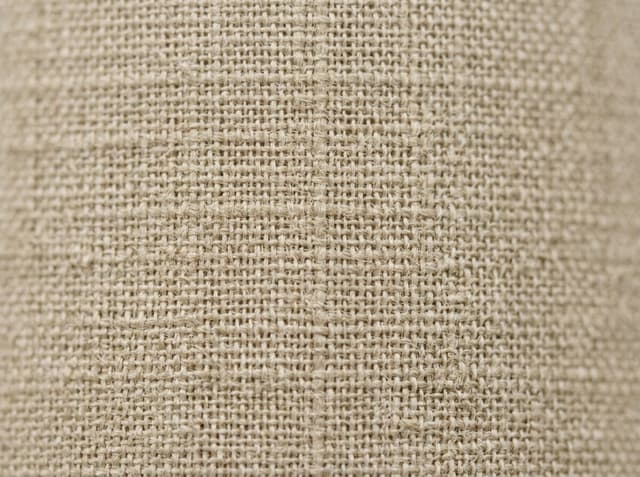
Converters, garment interlining suppliers, bag manufacturers, and drapery workrooms source three core 100% polyester filament lining constructions: taffeta (FDY crisp slip lining), pongee (DTY soft matte lining and shell cloth), and 2/1 twill (durable workwear lining and pocketing).
Weaverine weaves loom-state polyester greige across 55–120 GSM and 160–330 cm widths (No MOQ on stock greige specs; 2,000 m for bleached white; 3,000 m for piece-dyed solids). Below is the engineering matrix for specifying yarn denier, T-count density, and width on a lining or pocketing PO.
1. Core Polyester Lining & Pocketing Spec Matrix (190T to 300T & Twill)
| Lining Construction | Yarn Spec (Warp × Weft) | Thread Density (T / Inch) | Typical Finished GSM (oz/yd²) | Standard Finished Width | Hand Feel & Primary B2B Use |
|---|---|---|---|---|---|
190T Polyester Taffeta | FDY 50D/24F × FDY 50D/24F(or 63D×63D) | 190T (~104 × 86 EPI/PPI) | 55–62 GSM (1.62–1.83 oz/yd²) | 150 cm (58/60") | Crisp, slick hand; bag linings, umbrella cloth, promotional flags |
210T Polyester Taffeta | FDY 50D/24F × FDY 50D/24F(or 68D×68D) | 210T (~118 × 92 EPI/PPI) | 62–70 GSM (1.83–2.06 oz/yd²) | 150 cm (58/60") | Higher cover than 190T; suit/jacket sleeve lining, sleeping bag liner |
210T / 240T Semi-Elastic Pongee | FDY 50D × DTY 75D/72F | 210T–240T | 68–80 GSM (2.00–2.36 oz/yd²) | 150–300 cm (59–118") | Smooth face with soft, silent weft drape; apparel lining, drapery backing, quilt shell |
240T / 300T Full-Elastic Pongee | DTY 75D/72F × DTY 75D/72F | 240T–300T | 75–92 GSM (2.21–2.71 oz/yd²) | 150–300 cm (59–118") | Matte, quiet microfiber hand; down-proof shells, windbreakers, high-end duvet inserts |
2/1 Twill Lining & Pocketing | DTY 75D × 150D or 150D × 150D | 170T–230T twill | 85–115 GSM (2.51–3.39 oz/yd²) | 150–280 cm (59–110") | High seam-slippage & tear resistance; trouser pockets, workwear jackets, mattress ticking |
To convert yarn denier (50D, 75D, 150D) to dtex, tex, and filament diameter (DPF), use the Yarn Denier & dtex Converter. To calculate areal weight from EPI, PPI, and denier, use the Fabric Weight (GSM) Calculator.
2. Taffeta (FDY) vs. Pongee (DTY): How Yarn Texturing Changes Performance
Buyers often confuse 210T Taffeta and 210T Pongee because both use 1/1 plain weave and similar thread counts. The difference comes entirely from the filament yarn:
- Taffeta uses flat
FDY(Fully Drawn Yarn): The parallel, un-crimped filaments pack flat and reflect light with a slight sheen. The surface has low friction (ideal for sliding an arm into a coat sleeve), but produces an audible rustle when flexed and can show seam slippage if the sett is too open. - Pongee (
春亚纺) uses texturedDTY(Draw Textured Yarn): False-twist texturing adds microscopic crimp and bulk to the 72-filament or 144-filament yarn. The crimped filaments interlock at warp-weft crossings—eliminating paper-like rustle, producing a matte cotton-like hand, and improving seam slippage resistance.
3. Critical QC Tests for Lining & Pocketing Fabrics
Because linings and pocket bags bear concentrated stress at stitched seams, specify three physical lab standards on your PO:
| Quality Parameter | Standard Test Method | Typical Commercial Target | Why It Prevents Garment & Home-Textile Returns |
|---|---|---|---|
| Seam Slippage | ISO 13936-1 / ASTM D434 | ≤ 4.0 mm opening at 60 N (light lining) or 120 N (pocketing) | Prevents lining seams from pulling apart at coat armholes and pocket corners |
| Tear Strength | ISO 13937-2 / ASTM D1424 (Elmendorf) | ≥ 10–15 N across warp and weft | Prevents keys, coins, or hardware from ripping pocket bags |
| Color Fastness to Rubbing & Perspiration | ISO 105-X12 (Crocking) & ISO 105-E04 | Dry ≥ Grade 4–4.5 · Wet ≥ Grade 3.5–4 | Ensures dark navy or black jacket linings never stain a white shirt underneath |
4. Narrow (150 cm) vs. Wide-Width (280–315 cm) Lining Programs
- For apparel, workwear, and bag makers: Order
150 cm(58/60") finished cuttable width (woven from160 cmgreige) on100 mor150 mrolls. - For curtain backing, duvet shells, and mattress protectors: Order
280–315 cmfinished width (woven on our wide-width waterjet looms from300–330 cmgreige) so workrooms can cut seamless floor-to-ceiling drapery linings and king-size quilt shells. Compare cutting efficiency in the Width Converter and Roll Metres Calculator.
To request loom-state greige, bleached white, or piece-dyed lining swatches, contact our mill team or draft your technical sheet in the Spec Sheet Draft Tool.