Silk is reeled from a cocoon and this mill weaves 100% polyester. What it can quote is the weave that reproduces the property being asked for, never silk itself.
Silk
A protein filament reeled from the cocoon of the mulberry silkworm. Weaverine does not weave silk; a buyer who arrives wanting silk's hand is matched to the polyester weave that answers the specific property asked for — lustre, drape or a matte soft face.
By Wren Thunderborn, Head of Content
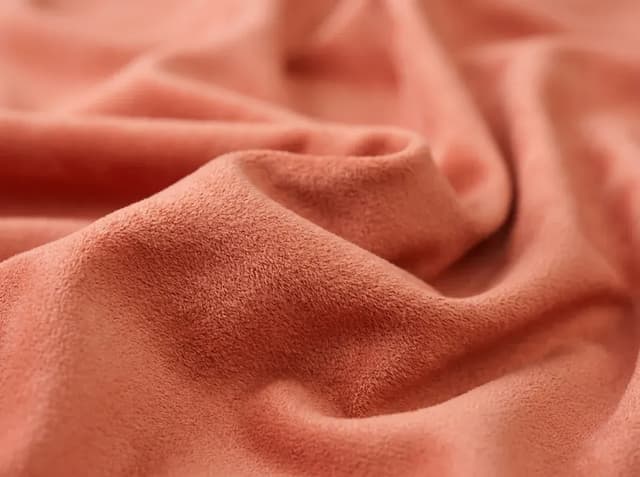
Silk is a protein filament reeled from a cocoon — not a fibre spun from staple, and not a polyester. Both of those facts matter here.
The second one is the honest part. This mill weaves 100% polyester and does not weave silk. But "I want silk" is almost never a request for the protein itself; it is a request for one of four properties — lustre, drape, a cool dry hand, or lightness with strength. Three of those four are reproducible in polyester, and the fourth is not.
What silk is, and why the cocoon decides everything
A silkworm extrudes two fine filaments of fibroin, glued together with a gum called sericin. One cocoon gives a continuous filament hundreds of metres long. That continuity is the whole commercial difference:
- Reeled silk is unwound from the cocoon as a continuous filament, several cocoons combined into one yarn. The result is smooth, strong and lustrous, because there are no fibre ends to scatter light.
- Spun silk comes from cocoon waste — the inner layers, the broken ends, the pierced cocoons. It is carded and spun like cotton or wool, so it is hairier, weaker and cheaper.
The same fibre, two completely different cloths, decided by whether the filament stayed continuous.
The grades a buyer actually meets
| Grade | What it is | Where it is used |
|---|---|---|
| Mulberry | Bombyx mori fed on mulberry leaf; long, white, even filament | The standard fine silk: habotai, charmeuse, crepe de chine |
| Tussah / wild | Other saturniid moths; shorter, coarser, tan | Texture-led cloth, slubby or rustic looks |
| Spun / noil | Recovered from cocoon waste; staple-spun | Lower-cost silk, blends, textured yarns |
Standard reeled yarn is sold around 20/22 denier — very fine, which is why silk cloth can be both light and opaque, and why it is priced the way it is.
The one property polyester cannot copy
This is the comparison a spec sheet never shows, and it decides whether substitution is safe:
| Property | Silk | Polyester |
|---|---|---|
| Moisture regain | ~11% | ~0.4% |
| Strength when wet | Loses about a fifth | Unchanged |
| Sun and heat | Degrades; yellows and weakens | Stable |
| Abrasion | Moderate | High |
| Cost per metre | High and volatile | Low and stable |
Moisture regain is the honest boundary. Silk absorbs and releases moisture from the skin, which is why it feels cool in heat and warm in cold. Polyester moves moisture along the fibre surface but barely absorbs it. No finish closes an 11%-versus-0.4% gap; a moisture-wicking finish changes how fast sweat spreads, not how much the fibre holds. For next-to-skin comfort in a humid climate, that difference is real.
Everything else on the table favours polyester, which is why hotel bedding, contract laundry and anything that must survive two hundred washes is polyester rather than silk.
What replaces silk, by the property asked for
A brief that says only "like silk" cannot be quoted. One that names the property can:
| What the buyer actually wants | The polyester answer | What is lost |
|---|---|---|
| Lustre and drape — charmeuse, satin | Satin weave, and satin stripe for a bedding surface | Silk's soft sheen becomes a glassier one; no moisture regain |
| A soft, peachy, matte hand — sand-washed silk | Peachskin, brushed woven, 75–120 GSM | Lustre; silk's dry coolness |
| Light, crisp, dry handle — habotai, China silk | Taffeta and pongee at the light end | Silk's softness; it reads more papery |
| Weight with a soft fall — crepe de chine | Pongee at 80–120 GSM, or peachskin at the top of its band | The crepe texture unless a crepe-twist yarn is specified |
That last row is where most substitutions go wrong: the drape is a yarn and finish decision, not a fibre decision, and a plain polyester at the right weight drapes like silk far better than a badly finished "silk-like" cloth.
What goes on the order
If a programme is moving off silk, say what is being replaced and why:
- The property, not the word — "lustre and drape", "matte soft hand", "light and crisp".
- The construction that follows — satin, plain, or brushed plain — and the weave plan.
- GSM and width, greige and finished, because the hand comes from the weight as much as the fibre.
- The finish, since a calendered face and a brushed face read as completely different cloths.
- The wash regime, so the shrink and the hand are tested against how the article will actually be laundered.
- Whether moisture management is functional or aesthetic. If it is functional, polyester is the wrong fibre and the brief should go to a silk or cellulosic supplier.
What this mill does
There is no silk here, and that is a fibre boundary rather than a limitation of the looms. This mill weaves 100% polyester on more than 650 waterjet looms — greige at 55–120 GSM and 160–330 cm, finished at 60–140 GSM and 150–315 cm, above 200,000 m/day.
What it can quote for a silk-origin brief:
- Satin weave and satin stripe — the lustre-and-drape answer, standard in bedding.
- Peachskin — the matte soft hand, 75–120 GSM, sanded in-house.
- Pongee and taffeta — the light, crisp, dry answer.
- Denier control on the yarn, which is what actually sets the hand at any given weight.
Stock greige carries no minimum; custom greige starts at 5,000 m and piece dyeing at 3,000 m per colour. For a substitution question, request a quote with the property you are replacing; for the base cloth, see greige fabric.
Common questions
What is silk made of?
- A protein. A silkworm extrudes two filaments of fibroin glued together with sericin, and one cocoon yields a continuous filament hundreds of metres long. Unlike cotton or polyester, silk is not spun from short staple fibres: it is reeled, which is why a silk yarn is smooth, continuous and lustrous where a spun yarn is hairy.
How is silk made, step by step?
- The moth lays eggs, the larvae eat mulberry leaf for about a month, then spin a cocoon over two to three days. Cocoons are stifled with heat to kill the pupa, then softened in warm water to dissolve the sericin gum, and the filament is reeled off several cocoons at once into one yarn. Spun silk instead comes from cocoon waste — the inner layers and broken ends — carded and spun like a staple fibre.
What is mulberry silk, and is it the best?
- Mulberry silk comes from Bombyx mori fed on mulberry leaves, and it is the standard fine silk of commerce because the filament is long, white and even. Tussah and other wild silks are coarser, more tan in colour and shorter-fibre, and they are valued for texture rather than purity. So yes for uniformity and lustre; a wild silk is chosen deliberately when its texture and colour are the point.
Is silk warmer than polyester?
- Comfort-wise it behaves differently rather than simply warmer. Silk's moisture regain is roughly 11% of its dry weight; polyester's is about 0.4%. That means silk absorbs and releases skin moisture, which moderates the microclimate next to the body, while polyester moves moisture only along the fibre surface. Polyester is a better insulator per gram when dry; silk is better at not feeling clammy.
What is the best polyester substitute for silk?
- It depends on the property, and the honest answer names it: for lustre and drape, a satin weave; for a soft peachy hand with a matte face, brushed woven peachskin or a pongee-style plain weave; for a crisp light cloth with a dry handle, taffeta. None of them reproduces silk's moisture regain, so a garment whose comfort depends on breathable absorption is a different brief.
Why does silk lose strength when wet?
- Because water breaks the hydrogen bonding between protein chains in the fibroin. Silk loses roughly a fifth of its tensile strength when saturated, which is why it is washed gently and never wrung. Polyester loses no strength when wet — a genuine advantage in washable home textiles, and the reason hotel bedding and contract laundry programmes are polyester rather than silk.
Related Terms
Sourcing silk or a polyester equivalent? We quote mill-direct programs from 5,000 m per specification.
Want to learn more textile terms?
Browse the full glossaryPolyester home-textile fabric, woven mill-direct for buyers worldwide.
Our mills run 650+ waterjet looms and produce 73M+ meters annually for bedding, curtain, and upholstery fabric programs.