Satin Weave
A weave structure with long floats that create a smooth, lustrous surface, typically with a 4/1 or higher pattern.
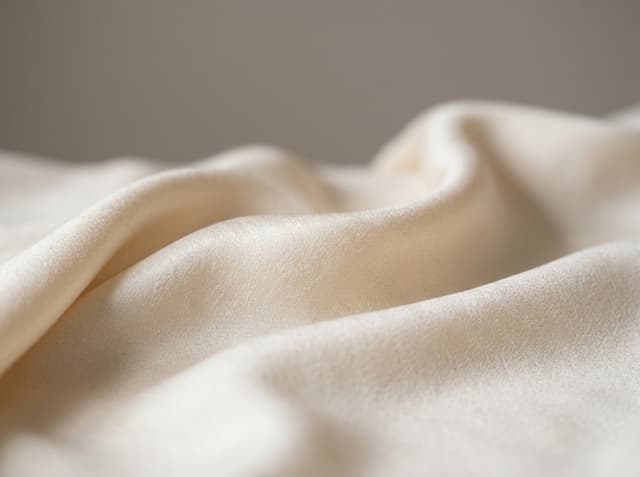
Satin weave definition: a weave whose long floats (a yarn passing over several opposing yarns before it interlaces) create a smooth, lustrous surface. Binding points sit far apart, so the face reflects light more evenly than plain or twill. Typical ratios are 4/1, 5/1, or higher.
Satin weave (schematic)
Binding points sit far apart. The outline marks one long float — that is the structure, not a later polish.
Dark = warp on the face. Light = weft on the face. Outline = one long float.
Long floats vs a finished polish
The float is the length of yarn on the face. The smooth surface is what that float produces—not a separate finish. Calendering can add more polish later; the structure is already the long-float satin (or weft-faced sateen).
Satin is usually warp-faced (warp dominates the face). Weft-faced versions are sateen. Filament yarns are common on warp satin; spun yarns are common on sateen. Interlacings are spread so they do not form the diagonal of a twill.
The same floats that make the face lustrous also leave more yarn exposed, so satin snags and shifts more easily than plain or twill. Handle and launder it as a long-float cloth, not as a tight plain weave.
Satin structure vs later finishes
Face-character illustrations. The satin is the interlacing plan; nap and print are not.
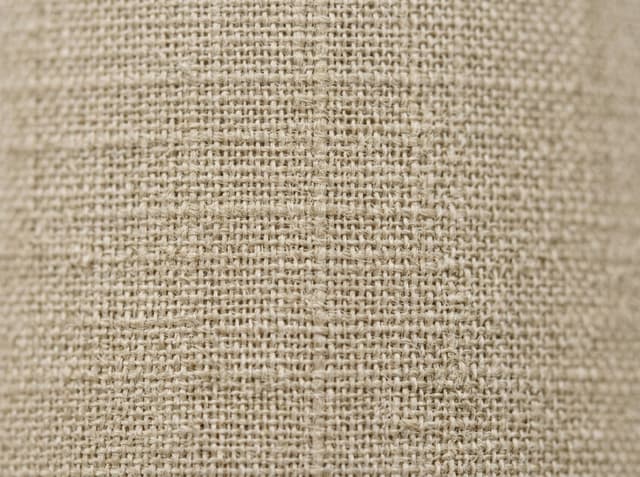 01
01Tight interlacing
Plain-like 1/1 faces do not read as satin. The float is missing.
02Lustrous face
What buyers mean by a satin look. Confirm the weave ratio on the sample.
 03
03Brushed nap
Peachskin sanding is a later finish. It is not the satin structure.
Where the construction is used
Linings (smooth slide), drapery (light on the face), and some bedding programs that want a lustrous face. When the lustre sits in bands next to a plainer ground, that merchandise is satin stripe, not a full-width satin. Write warp-faced or weft-faced, ratio (e.g. 4/1), fiber, width, and GSM on the RFQ—not only "satin."
Common types of satin by fiber
| Type | Fiber note | Buyer use |
|---|---|---|
| Polyester satin | Durable, wrinkle-resistant, holds sheen | Home-textile programs where easy care matters |
| Cotton satin / sateen | Softer, breathable, subtler sheen | Bedding that must feel cotton-soft |
| Crepe-back satin | Lustrous face, matte crepe reverse | Two-face programs (drapery, linings) |
| Charmeuse-type satin | Lightweight, fluid drape | Apparel-weight goods, not mill staple |
Same long-float logic in every row—fiber sets hand, care, and dye route. Name fiber plus ratio on the RFQ.
Satin weave fabric: what buyers specify
Satin weave fabric is the same long-float structure ordered as merchandise. On a polyester home-textile program, freeze ratio, fiber and yarn, finished width, and GSM—not only the word “satin.” Filament yarns read more lustrous; spun yarns (see sateen) read softer with less glare.
Weaverine's in-production satin program is satin stripe: satin-float bands on a plain ground, woven on waterjet looms with a dobby attachment, 5,000 m per specification. Full-width polyester satin is quoted as a custom greige program from 5,000 m—confirm ratio, width, and GSM on a woven sample, and handle the long-float face as a snag-sensitive cloth.
Spec tools
Common questions
What is the definition of satin weave?
- Satin weave is a structure whose long floats—yarn passing over several opposing yarns before interlacing—create a smooth, lustrous surface. Typical mill ratios are 4/1, 5/1, or higher.
How is satin weave different from sateen?
- Satin is usually warp-faced (warp dominates the face). Weft-faced versions are called sateen. Filament yarns are common on warp satin; spun yarns are common on sateen. Weaverine's in-production satin is satin stripe — satin-float bands on a plain ground, 5,000 m per specification.
Why do satin weaves snag more easily?
- The same long floats that make the face lustrous leave more yarn exposed, so satin snags and shifts more easily than plain or twill.
What is satin weave fabric, and what are the types of satin?
- Satin weave fabric is the long-float structure ordered as merchandise; types of satin are fiber variants of that plan—polyester satin for durable easy-care programs, cotton satin/sateen for softer breathable bedding, crepe-back for two-face goods, charmeuse-type for lightweight drape. Name fiber plus ratio, width, and GSM on the RFQ.
Related Terms
Sourcing satin weave or a polyester equivalent? We quote mill-direct programs from 5,000 m per specification.
Want to learn more textile terms?
Browse the full glossaryPolyester home-textile fabric, woven mill-direct for buyers worldwide.
Our mills run 650+ waterjet looms and produce 73M+ meters annually for bedding, curtain, and upholstery fabric programs.