Dobby Weave Fabric
Dobby weave fabric has small geometric patterns woven into the cloth on a dobby loom—the design is part of the structure, not a print on the surface.
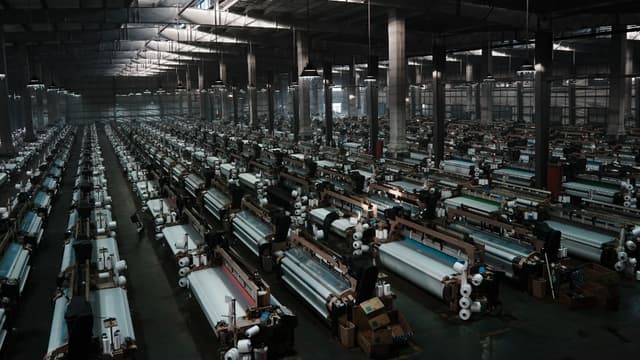
What is dobby weave? It is a fabric structure produced on a dobby loom. The dobby mechanism selects warp groups in programmed sequences so small geometric patterns are woven into the cloth. The texture is structural—not printed, embossed, or applied later as a coating. “Dobby fabric” is the same goods viewed as merchandise; specify motif, repeat, fiber, width, and GSM—not only the word “dobby.” On a polyester waterjet mill the dobby is often a head on the existing waterjet, not a separate hall—Weaverine weaves satin stripe and other small figures that way. For the machine, see dobby loom.
History in one paragraph
The dobby mechanism dates to the early 19th century: a program carrier (historically a chain of bars with pegs) selecting which shafts lift on each pick, so small repeats could run without full manual pick-and-pick control. The trade name is commonly linked to “dobbie” loom attachments and to the draw-boys who once lifted warps by hand. Computer control later replaced chains with electronic shaft selection and visual draft software—the same principle, fewer mis-picks. Full large pictorials stayed on jacquard.
Dobby weave (schematic)
A small figure is programmed into the interlacing. It is not a print sitting on a plain ground.
Dark = warp on the face. Light = weft on the face.
Dobby weave pattern
A dobby weave pattern is the small geometric figure woven into the cloth—dots, diamonds, bird’s-eye, fine grids, modest checks. The motif is structural: selected warps rise and fall on a dobby loom. It is not a print, emboss, or yarn-dyed stripe by itself (those can sit on a dobby ground).
Apparel primers often point to piqué (polo-shirt texture) as the familiar dobby. Home-textile RFQs use the same idea for curtain and upholstery grounds: a subtle raised or recessed repeat, not a large pictorial jacquard. Warp and weft can be the same color (texture only) or contrast slightly so the figure reads more clearly.
Approve motif / design code, repeat size, and face vs back on a sample. “Dobby weave pattern” on a PO without those fields is not a construction.
Dobby fabric vs Dobby weave: What buyers need to know
A dobby pattern is usually a modest geometric repeat—dots, diamonds, bird’s-eye, fine grids—readable as texture more than as a large printed design. Pattern size and clarity depend on yarn, sett, and the dobby program; many home-textile and shirting textures use relatively small repeats (often discussed as under roughly 5 cm in industry talk—confirm on the design, do not copy a size limit onto the PO without a sample).
The interlacing plan is woven in: selected warps rise and fall in a programmed sequence. That is the difference from print or emboss that only changes the face after weaving. Freeze motif code, repeat, face/back, fiber, and GSM on the quote.
Dobby vs plain weave vs jacquard
| Construction | Pattern capability | Typical buyer use |
|---|---|---|
| Plain weave | Uniform 1/1 face | Stable bases for many bedding/curtain programs |
| Dobby weave | Small geometric/textured motifs (often modest repeats) | Subtle surface interest without full jacquard cost |
| Jacquard | Large, complex motifs | Statement designs where figure size matters |
Dobby sits between simple plain weaving and full jacquard. Pattern repeats on dobby cloth are often relatively small (commonly discussed in the industry as under roughly 5 cm for many shirting and home-textile textures—confirm on the actual design). That makes dobby a tool for subtle texture, not large pictorial motifs.
Dobby is structure — not print, not yarn dye
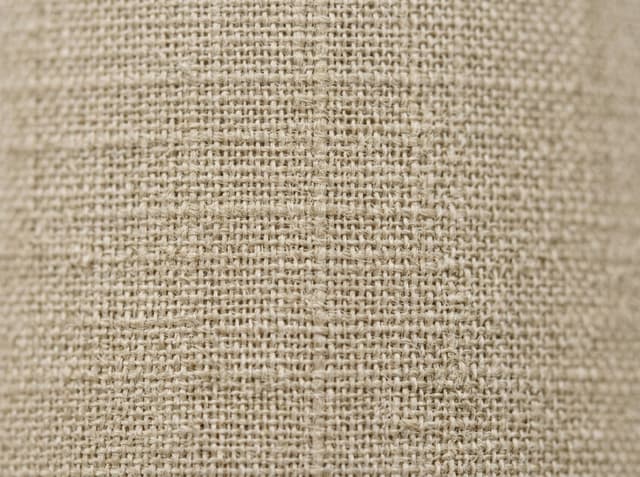
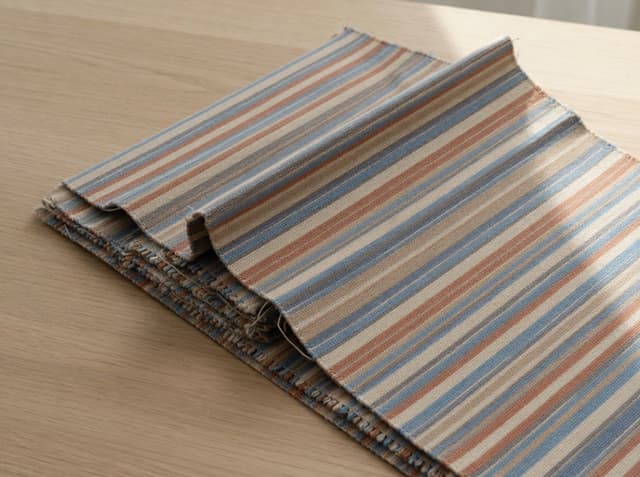
These photos show what dobby is not. The schematic above is the figure.
 01
01Plain ground
No dobby figure. A 1/1 face is not a dobby pattern.
 02
02Print on the face
The motif is applied after weaving. It is not a dobby weave.
 03
03Yarn-dyed stripe
Color is in the yarn. A stripe is not a dobby motif by itself.
Common dobby looks
- Small dots and piqués
- Diamonds and bird’s-eye
- Fine stripes, checks, and grid textures
- Other small geometric grounds
These add visual depth and a less “sheet-flat” hand than plain weave. Structure can also change local density and drape compared with a plain ground at the same yarn count—always sample the actual construction.
Common dobby types by fiber and use
| Figure | Face idea | Common fiber | Typical buyer use |
|---|---|---|---|
| Pin dot | Fine raised dots | Cotton or poly/cotton | Shirting grounds with subtle texture |
| Stripe / mini-check | Narrow vertical lines, fine grids | Cotton, poly blends | Shirts, dresses, curtain grounds |
| Honeycomb | Raised cells | Cotton or polyester | Tablecloths, curtains, textured bedding |
| Diamond / geometric | Small diamonds, bird's-eye | Cotton, linen, polyester | Fashion and home-décor grounds |
Fiber sets hand and care more than the figure does—cotton dobby breathes and presses crisp; polyester dobby dries fast and holds shape. Name fiber alongside motif on the RFQ.
Cotton dobby fabric (and other fibers)
Cotton dobby fabric is a frequent RFQ phrase for shirting, shirting-weight home textiles, and decorative grounds where a small woven texture sits on a cotton or cotton-rich base. Cotton dobby weave fabric is the same goods named by construction. The dobby part is the structure; the fiber still must be written on the PO (100% cotton, poly/cotton, or polyester dobby for home-textile programs). Pattern, GSM, width, and finish route change more with fiber and yarn than with the word “dobby” alone—approve a sample on the actual construction.
Dobby care and common questions
- Does dobby fabric shrink? Cotton dobby can—specify pre-shrunk or confirm shrinkage on the sample; polyester dobby is dimensionally steadier.
- Is dobby good for summer? Cotton dobby breathes and reads light; polyester dobby suits programs that need fast dry and shape hold.
- How do you identify dobby? Look for texture woven into the cloth, not printed on it—raised dots, grids, or diamonds that survive a rub test a print would fail.
- Is dobby expensive? Less than a full jacquard program for the same motif scale; cost follows fiber, density, and finish, not the word “dobby.”
Specifying dobby fabric
When you quote or approve dobby, freeze more than “dobby” as a word:
- Pattern — name or design code, and approved handloom/sample
- Repeat size and face/back if different
- Fiber, yarn, density, GSM, width
- End use — shirting, bedding ground, towel structure, decorative home textile, etc.
- Finishing — dyeing, peachskin, softener, or functional finish after weaving
Commercial ranges for dobby constructions vary widely by mill and end use; treat published GSM/width bands on any supplier sheet as that program’s envelope, not a universal standard.
Best uses in polyester home textiles
Small-figure dobby grounds suit curtain and upholstery programs that want surface interest without a full jacquard cost, plus bedding grounds where a subtle texture hides flatness. In-production proof on the same waterjet-plus-dobby route is satin stripe at 5,000 m per specification—tone-on-tone sheen bands, not print.
Related reading
- Loom mechanism: dobby loom
- Base constructions Weaverine frequently discusses for polyester home textiles: plain weave, twill weave
- Weave family overview: fabric weaves guide
- Product exploration: products catalog
Mill greige context
Dobby is the clearest case on this site of a capability that belongs to the mill rather than to a definition. On Weaverine greige polyester programs the base sits roughly in the 55–120 GSM range at 160–330 cm widths, and the dobby is a head attached to the existing waterjet looms — not a separate jacquard hall. That is what lets a small figure or a band be woven on the same machine as the plain and twill base.
Satin stripe is in production on exactly this setup — polyester satin-float bands on a plain ground, woven on waterjet plus dobby shedding, floor 5,000 m per specification. Small geometric figures and other band plans confirm motif, band width and ratio on a sample, because those are dobby settings rather than catalogue items.
So the useful question to put to a mill is not "can you do dobby" but "what is your figure repeat limit, and can you weave the figure and the ground on the same loom". A mill that answers the second is describing a machine; one that answers the first is answering a brochure. For the base specification, use the product page.
Spec tools
Common questions
Define dobby: what does dobby mean in fabric?
- Dobby means a small geometric figure woven into the cloth on a dobby loom—dots, diamonds, bird's-eye, fine grids—not a print. Specify motif, repeat, fiber, width, and GSM on the RFQ.
What is dobby meaning in textiles?
- Dobby meaning in textiles is the same small-figure structure: programmed warp selection makes texture part of the cloth. It sits between plain weave and full jacquard for pattern scale and cost.
What is dobby weave?
- Dobby weave is a fabric structure made on a dobby loom. Small geometric patterns are woven into the cloth, so the design is part of the structure, not a print on the surface.
What is the difference between dobby fabric and dobby weave?
- They describe the same goods. Dobby weave is the construction; dobby fabric is the merchandise name. Specify motif, repeat, fiber, width, and GSM—not only the word dobby.
How is dobby different from jacquard?
- Dobby weaves small geometric or textured motifs. Jacquard can carry large, complex figures. Use dobby for subtle surface interest without a full jacquard program.
What is a dobby weave pattern?
- A dobby weave pattern is a small geometric repeat woven into the cloth—dots, diamonds, bird's-eye, fine grids—not a print. Approve the motif and repeat on a sample.
What are common dobby weave fabric examples?
- Pin-dot shirting, mini-check and stripe grounds, honeycomb tablecloths and curtains, diamond and bird's-eye fashion and home-décor grounds. Name the figure plus fiber—cotton dobby weave fabric breathes and presses crisp; polyester dobby dries fast and holds shape.
Related Terms
Sourcing dobby weave fabric or a polyester equivalent? We quote mill-direct programs from 5,000 m per specification.
Want to learn more textile terms?
Browse the full glossaryPolyester home-textile fabric, woven mill-direct for buyers worldwide.
Our mills run 650+ waterjet looms and produce 73M+ meters annually for bedding, curtain, and upholstery fabric programs.