Weaverine is a weaving mill, not a freight broker or an importer of record. We price FOB Ningbo; a DDP quote comes from a forwarder.
DDP Full Form: What the Price Contains and What It Costs
DDP — Delivered Duty Paid — is the Incoterm where the seller delivers goods to a named place, cleared for import, with duties paid. It is the largest obligation on the seller and the least common quote from a mill.
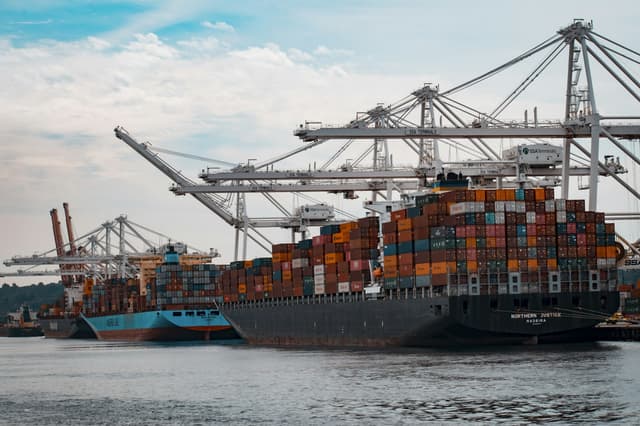
DDP stands for Delivered Duty Paid. It is the Incoterm with the widest obligation on the seller: goods are delivered to a named place, cleared for import, with duties and taxes paid — and risk stays with the seller all the way to that point.
It is also, on a mill quote, the rarest term you will see. That combination is the whole story of this page: the term is well defined, useful in narrow cases, and structurally awkward for a manufacturer.
DDP versus the other Incoterms
| Term | Seller delivers | Who clears for import | Who pays duty |
|---|---|---|---|
| EXW | At the mill gate | Buyer | Buyer |
| FOB | On board the vessel at a named port | Buyer | Buyer |
| CIF | On board at a named port, freight and insurance to destination | Buyer | Buyer |
| DDP | To the buyer's named place, ready for use | Seller | Seller |
The jump from CIF to DDP is not a small one. Under CIF the seller stops at the port; under DDP the seller carries the destination leg, the customs entry and the duty bill.
What sits inside a DDP price
A "DDP New York USD 4.50/meter" quote already contains, stacked together:
- Inland trucking from the mill to the departure port
- Export customs clearance and documentation
- Ocean or air freight to the destination
- Marine insurance
- Import clearance in the destination country
- Duty and any tax the seller has agreed to carry
- Final delivery to the named address
Because every line is already in the number, the buyer's visible cost is zero — and the buyer's visibility into the breakdown is also close to zero, which is the trade-off.
When DDP genuinely helps
- Samples and small parcels. The customs administration for three metres of fabric often costs more than the freight.
- Buyers without an import set-up. No broker relationship, no registration, no clearance to arrange.
- E-commerce and direct-to-consumer flows, where each parcel is individually cleared.
In all three cases the administrative overhead of the import leg dwarfs the shipment value — which is exactly when DDP earns its premium.
When it hurts
- Container and bulk shipments. The buyer loses the ability to choose a carrier, consolidate freight across suppliers, or negotiate ocean rates. Large buyers would be paying a premium to give up the control they buy DDP to avoid.
- Buyers with their own forwarder. DDP replaces a costed, auditable process with a single opaque number.
- Anything where customs valuation is uncertain. Under DDP a revaluation is the seller's cost, and a mill has no incentive to model it carefully.
- Buyers who reclaim VAT. Importing in their own entity lets them reclaim; importing under someone else's name usually does not.
Why mills rarely offer it
A weaving mill is a manufacturer, not an importer of record in your country. Quoting DDP means accepting destination customs rules, defending an HS code classification, carrying duty on the full declared value, and resolving any customs query without a local presence.
That is a forwarder's job, not a mill's. Weaverine prices FOB Ningbo for that reason, and we are explicit that we are not a freight broker or an importer of record. If you need a DDP number, ask your forwarder for one against our FOB price and you will see the stack itemised.
DDP excluding VAT
A common variation is "DDP excluding VAT" (DDP ex VAT): the seller still clears, delivers and pays duty, but destination VAT is settled by the buyer. Sellers use it because importing as a local entity creates VAT registration and reclaim obligations they cannot always discharge.
Two things to confirm in writing before booking: who is the importer of record, and whether VAT is included at the destination rate or at the rate where the goods were sold.
What to check before accepting a DDP quote
- Importer of record. Named, or not? It should be stated on the contract.
- HS code used for the duty calculation, and who owns the classification risk.
- What happens on revaluation, and which side pays the difference.
- Incoterms year — Incoterms 2020 is current.
- Delivery point, stated as an address rather than "your warehouse".
Read next: FOB and FOB Ningbo for the term we do quote, CIF for the middle option, HS code because duty starts with classification, and how to source fabric from China for the route end to end.
Common questions
What does DDP stand for in shipping?
- DDP stands for Delivered Duty Paid. Under the Incoterms 2020 rules the seller's obligation is the widest of any term: the seller delivers the goods to a named place, cleared for import, with duties and taxes paid. Risk stays with the seller until that delivery point.
What is included in a DDP price?
- Everything between the mill and the buyer's door: inland transport, export clearance, ocean or air freight, insurance, import clearance, duty payment and final delivery. That stack is why a DDP quote always sits above the FOB equivalent once freight and duty are added.
Is DDP better than FOB?
- For a few metres of fabric or a courier parcel, DDP is often simpler than the freight cost itself. For a container of greige, it is usually worse: the buyer loses the ability to choose the carrier, consolidate with other suppliers, and control insurance. Buyers with their own forwarder normally prefer FOB.
Why do textile mills rarely offer DDP?
- Because a mill is a manufacturer, not an importer of record in your country. Selling DDP means taking on destination customs rules, duty classification under the HS code, and the risk that a customs valuation disagrees with the price. Most mills price FOB and let a forwarder or the buyer carry the import leg.
What is DDP excluding VAT?
- It is DDP with destination value-added tax left out: the seller still clears and delivers and still pays duty, but the buyer settles VAT. Sellers use it because importing as the local entity creates VAT registration and reclaim obligations they cannot always meet. Confirm the split in writing before booking.
What happens if customs disputes the value on a DDP shipment?
- It is the seller's problem, and that is the point. If a customs authority revalues the goods upward, the duty difference is owed by the seller under DDP. This is the single biggest reason experienced buyers prefer to keep import clearance in their own hands.
Related Guides
Related Terms
Sourcing ddp (delivered duty paid) or a polyester equivalent? We quote mill-direct programs from 5,000 m per specification.
Want to learn more textile terms?
Browse the full glossaryPolyester home-textile fabric, woven mill-direct for buyers worldwide.
Our mills run 650+ waterjet looms and produce 73M+ meters annually for bedding, curtain, and upholstery fabric programs.