Leno Weave
An open weave structure where pairs of warp threads twist around each other, locking the weft threads in place.
What is leno weave? An open mesh where pairs of warp yarns twist around each other between picks, locking the weft. Buyers also say leno fabric or leno cloth. The cloth looks airy, but the twist keeps openings more stable than a loosely set plain weave that can shift and “grin.”
Leno weave (schematic)
Paired warps cross around the weft. That twist is true leno — mock leno only looks open.
Crossing lines are paired warps twisting around the weft.
Leno weave structure (how it is built)
Leno weave structure needs a doup / leno device on the loom. One warp of the pair crosses over its neighbor before the weft is inserted; after the pick, the warps return, trapping the weft in the twist. That mechanical lock is why open leno stays open under handling better than a plain gauze sett without twisting.
Buyers who ask for leno weave structure usually want confirmation of true leno (real warp twist) versus mock leno (open look from a normal interlacing plan without true doup twisting).
Full leno, half leno, and mock leno
| Variant | Idea | Notes |
|---|---|---|
| Full leno | Twisting across the fabric | Maximum open stability |
| Half leno | Twisted and non-twisted zones alternate | Patterned open areas |
| Mock leno | Open look without true warp twist | Different structure—sample carefully |
Write the variant, openness / mesh scale, fiber, width, and GSM on the RFQ—not only “leno.”
What leno is used for
Typical programs where open, stable mesh matters:
- Curtain sheers and light-filtering soft furnishings
- Mosquito / insect netting where openings must stay consistent
- Produce bags that need breathability without yarn slip
- Medical gauze-type constructions (program-dependent standards)
Weaverine’s commercial focus is polyester home-textile bases; treat end-use claims as program-specific and approve a sample for the exact construction.
Specifying leno on the PO
- True leno vs mock leno
- Mesh / openness target and stability tests you care about
- Fiber, yarn, width, GSM
- Finish route (heat set, softener, etc.)
- End use (sheer, netting, packaging, medical) so the mill does not substitute a look-alike plain open weave
Mill greige context
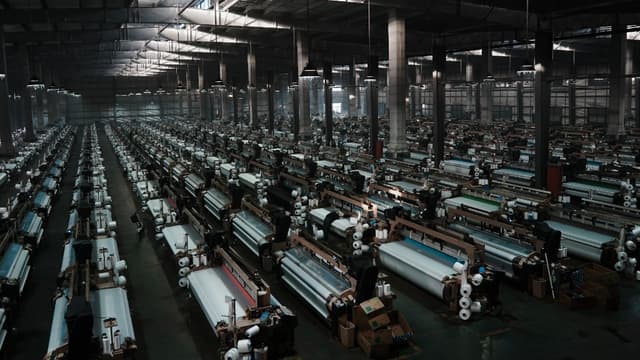
Leno is a shed-dependent structure, which makes it a machine question as much as a weave question — and that is where a mill is worth talking to. On Weaverine greige polyester programs the woven base sits roughly in the 55–120 GSM range at 160–330 cm widths on 650+ waterjet looms, and leno-type open structures are produced through shedding — the same mechanism that carries a dobby head on those looms.
The practical point is the one buyers get wrong. A leno effect in a cloth can come from two quite different places: a true leno weave, where warp and weft cross each other and lock the structure, or a dobby-shed open figure that only resembles one. They look similar from a distance and behave differently under tension, and the second is much easier for a mill that already runs a dobby head to produce.
So the question to ask is not "can you weave leno" but "is the open structure a true leno weave, or a dobby-shed figure, and which do I get at my width?" That distinction, the shed capacity at 160–330 cm, and the yarn are the actual specification. Ask for a sample at your construction and check it under tension rather than flat.
For the base specification, use the product page.
Related reading
- Base interlacing compare: plain weave
- Home-textile contexts: curtain fabric
Spec tools
Common questions
What is leno weave?
- Leno weave is an open mesh where pairs of warp yarns twist around each other between picks, locking the weft so openings stay more stable than a loose plain weave.
What is the difference between leno fabric and mock leno?
- True leno twists warps with a doup or leno device. Mock leno only looks open from a normal interlacing plan without that twist.
What is leno cloth used for?
- Typical uses include curtain sheers, insect netting, produce bags, and some gauze-type constructions. Weaverine's focus is polyester home-textile bases, so approve a sample for the exact construction.
Sourcing leno weave or a polyester equivalent? We quote mill-direct programs from 5,000 m per specification.
Want to learn more textile terms?
Browse the full glossaryPolyester home-textile fabric, woven mill-direct for buyers worldwide.
Our mills run 650+ waterjet looms and produce 73M+ meters annually for bedding, curtain, and upholstery fabric programs.