Stage language (PFD / RFD vs greige). Mill greige widths, GSM bands, and inventory live on the greige product path — not a PFD SKU on this page.
PFD Fabric Meaning: Prepared for Dyeing
PFD fabric is cloth that has been scoured and usually bleached so it takes dye or print evenly — unlike greige (loom-state) cloth, which still needs wet preparation. PFD is a stage, not a finished shade.
PFD means Prepared for Dyeing: cloth that has been scoured and usually bleached so dye or print takes evenly. On a purchase order it is a dye-ready stage, not a colour name and not greige — and the difference between the two is what decides whether a lab dip matches on the first try.
By Wren Thunderborn, Head of Content
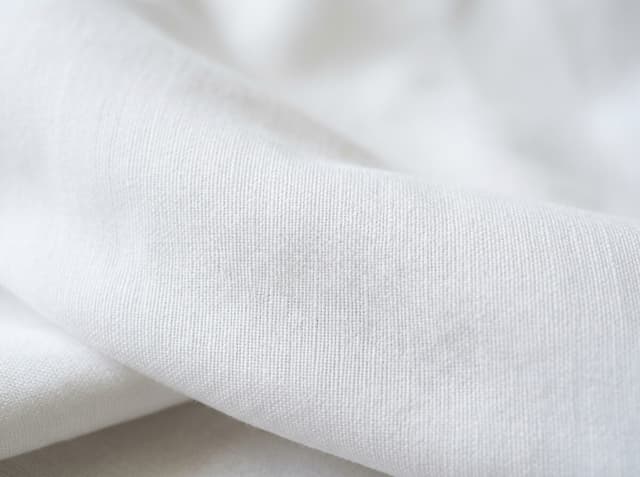
What does PFD mean in fabric? PFD fabric is Prepared for Dyeing cloth: it has already been scoured and (usually) bleached so dye or print can take evenly. On a purchase order it is a dye-ready stage, not a color name and not greige straight off the loom.
Where PFD sits: greige → prepared → color
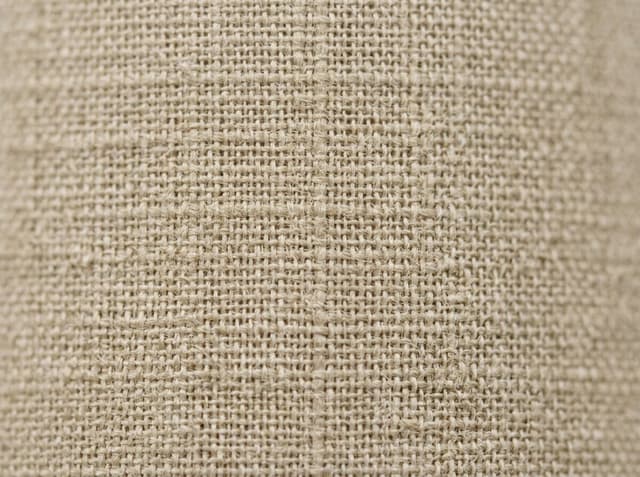
Program photographs of similar constructions — not one roll shot at three stages.
 01
Greige
Still unfinished. The next plant must scour and bleach if it wants dye-ready cloth.
02PFD
Prepared for dyeing. Still uncolored. Write tests — the letters are not a spec.
 03
After dye
Lab-dip or bulk color. P/D is the path, not the PFD line item.
Spelling: PFD, and the typos that travel with it
PFD is the standard abbreviation for prepared for dyeing. Two misspellings show up regularly in buyer email and enquiry forms:
| Typed as | Read as |
|---|---|
| PFD | correct |
| PFGD | PFD — a letter out of order |
| PPD | PFD — a doubled letter |
PFGD fabric means prepared-for-dyeing fabric, the same cloth. A misspelling in a stage abbreviation is worth correcting on the PO, because PFD sits in a specific point in the preparation chain — mislabelling the stage can change what gets washed, bleached or softened before dyeing.
What does PFD mean in textile purchase orders?
Use PFD when the next plant will dye or print soon and should not have to run full greige preparation. It is always a process stage, not a brand, fiber type, or fashion shade. Related labels: prepared for dye, prepared for dyeing fabric, scoured and bleached base, and trade synonym RFD (ready for dyeing)—often commercial synonyms when tests are written the same way.
Not “PFD color.” On a mill RFQ, PFD is a half-finished dye-ready base. It is not a retail paint or Pantone-style color name. White dye-ready bases may be called PFD white—still a preparation stage. Pin intent: loom-state greige, dye-ready PFD/RFD, or a finished colorway.
P/D, Y/D, PRT, PFP (same RFQ family)
On mill quotes these letters sit next to PFD. They are process or color-path codes, not fiber types:
| Letters | Usual meaning | Not the same as |
|---|---|---|
| PFD / RFD | Prepared / ready for dyeing | A finished shade |
| PFP | Prepared for printing | A strike-off or print design |
| P/D | Piece dyed (color on the cloth after weaving) | Greige or PFD |
| Y/D | Yarn dyed (color in the yarn before weaving) | Piece dye |
| PRT | PFD base only |
A PFD line item is still uncolored. The next approval is usually a lab dip (solid shade) or a strike-off (print). Do not treat “PFD” as “will take any dye on any fiber without a trial.”
What a PFD label does not guarantee
A supplier can stamp PFD fabric and still leave tests unstated. The letters do not automatically mean:
- Optical-white / a CIE number
- Pre-shrunk or sanforized
- Free of optical brightener or softener (those can block the next dye)
- Ready for every dye class or print method
- The same width/GSM as the greige you quoted (wet process moves dimensions)
Write the preparation steps, absorbency / whiteness / pH / residuals, and the next process (piece dye, garment dye, print / PFP). Then run a dye trial on that construction.
PFD vs Greige vs RFD: Key specification differences
| Stage | What you receive | Typical next process |
|---|---|---|
| Greige | Loom-state cloth; sizing/oils may remain | Scour / bleach / prepare, then dye, print, or finish |
| PFD | Pretreated, usually bleached, dye-ready base | Piece dye, garment dye, or print |
| RFD | “Ready for dyeing” trade label | Same commercial use as PFD for many mills—write tests on the PO |
In trade, PFD and RFD are often used interchangeably. Some suppliers use PFD for the preparation process and RFD for the resulting condition. Do not rely on the letters alone: list the preparation steps and lab targets you need. A side-by-side buyer note lives in greige vs PFD vs RFD.
How fabric becomes PFD
Preparation is a sequence, not a single wash:
- Singeing — burns off protruding surface fibers for a cleaner face.
- Desizing — removes warp sizing from weaving.
- Scouring — removes oils, waxes, and process residues that block dye.
- Bleaching — whitens the base so shade is not shifted by natural color.
- Optional fiber-specific steps — e.g. mercerizing on some cotton routes for luster and dye affinity (not universal for polyester).
Well-prepared PFD cloth looks evenly white, absorbs water consistently across the piece, is free of sizing/oil residues, and sits near a neutral pH so the dye house can start without rework.
Specs buyers usually confirm
Exact numbers belong on your dye-house specification. Many commercial programs use targets in this neighborhood—treat them as discussion points, not universal guarantees:
- Whiteness (often expressed on a CIE-type scale; some buyers look for roughly 80+)
- pH near neutral (often around 6.5–7.5)
- Absorbency (e.g. water-drop penetration within a few seconds)
- Residual chemicals within agreed limits
- Width, GSM, weave, fiber, and roll length after preparation (wet process can change dimensions)
What PFD cloth looks like, and what it must not carry
PFD is not a retail white, and the trade's own description of it is inherited from cotton.
The colour depends on the fibre. A cotton PFD comes out of the preparation line off-white or light cream: scouring removes the waxes, oils and pigments, but it cannot remove the fibre's own creamy tone, and an unbleached cotton base takes dye more evenly than an optically whitened one. A polyester PFD is the other case — the filament has no pigment to remove, so the same preparation comes out at the fibre's own brightness, a clean white, which is why a polyester PFD is quoted by CIE whiteness rather than by a shade. Our bleached white programme is quoted at CIE 120+.
And it must not carry anything that blocks dye. A PFD base is free of:
- softeners — a softener film sits on the fibre and the dye cannot reach through it
- water-repellents — a fluorochemical finish sheds the dye bath as well as the water
- optical brighteners — a brightener fluoresces blue over the dye, so the finished shade does not match the lab dip
- starches that were not fully desized — a surviving size is a barrier, and it shows up as uneven shade
That list is the practical test of whether a cloth was really prepared: ask what is on it, not what it is called.
If it will be sewn and then dyed
PFD is used for two things that happen after the cloth leaves the mill, and both change what you should ask for.
Garment dyeing — blank apparel. The garment is cut and sewn first, in its undyed state, and the whole batch is dyed afterwards. That is why PFD matters here: a base cloth carrying a softener or a brightener will not take the bath the same way as the body of the garment, and the panel and the seam end up as two colours. Small-scale dyeing works the same way — tie-dye and block printing need a clean, dye-ready base if the colour is to land where it is put.
And sew it with 100% cotton thread. A polyester thread on a PFD base does not take a garment bath the way a cotton body does, so the seams read as a different colour after dyeing. Cotton thread takes the dye at the same rate as the cloth it is sewing. This is an easy thing to miss and an expensive one to discover after the dye house.
Printing. A PFP (prepared for printing) base is the same preparation read for a print rather than a dye: the flat, even surface is what lets a rotary, flatbed or digital print take a fine design without the weave texture showing through.
When to specify PFD
Choose PFD / RFD when the next supplier must dye or print soon and cannot run full greige preparation. Choose greige when your nominated finisher will control all wet preparation, or when you want mill greige polyester as a flexible base (stock widths 160–330 cm, 55–120 GSM on Weaverine programs).
What width each of our programs actually runs
Three bands across the catalog. Greige is woven wider than the finished width because finishing takes a little width out in shrinkage; everything else is quoted at its finished width.
| 160–330 cm | Greige Polyester Fabric |
| 150–315 cm | 17 programs (the mill-wide standard) |
| 150–280 cm | Washed Cotton Feel |
What GSM does each fabric program actually run?
These are the ranges our own product pages publish, not industry averages. If your program needs a weight outside its range, ask — most of it is woven to order rather than held as stock.
| Fabric program | GSM range | Width range |
|---|---|---|
| Blackout | 180-280 | 150-315cm |
| Washed Cotton Feel | 80-120 | 150-280cm |
| Peachskin | 75-120 | 150-315cm |
| Antibacterial & Anti-Mite | 60-140 | 150-315cm |
| Bleached White | 60-140 | 150-315cm |
| Digital Print | 60-140 | 150-315cm |
| Disperse Print (Rotary) | 60-140 | 150-315cm |
| Embossed Floral | 60-140 | 150-315cm |
| Embossed Geometric | 60-140 | 150-315cm |
| Insect-Repellent | 60-140 | 150-315cm |
| Moisture-Wicking | 60-140 | 150-315cm |
| Pigment Print | 60-140 | 150-315cm |
| Regenerated Polyester | 60-140 | 150-315cm |
| Satin Stripe | 60-140 | 150-315cm |
| Softener Treated | 60-140 | 150-315cm |
| Solid Dyed | 60-140 | 150-315cm |
| Stain-Resistant | 60-140 | 150-315cm |
| Wrinkle-Resistant | 60-140 | 150-315cm |
| Greige Polyester Fabric | 55-120 | 160-330cm |
What to put on the PO for PFD
- Stage: PFD or RFD (and what your supplier means by each)
- Preparation steps expected (scour / bleach / others)
- Whiteness, pH, absorbency, residual limits as your dye house requires
- Width, GSM, weave, fiber after preparation (wet process can move dimensions)
- Color path next: piece dye, print, then lab dip if shade must match
For mill-stock greige and finishing route questions, start from the greige product page or the greige fabric manufacturing guide. For custom solid colors, see solid dyed fabric and lab-dip approval before bulk.
For the whiteness number a bleacher reports, see CIE whiteness.
For the difference between PFD and RFD, see PFD vs RFD.
Spec tools
Common questions
What does PFD mean in fabric?
- PFD means Prepared for Dyeing: cloth that has been scoured and usually bleached so dye or print can take evenly. It is a dye-ready stage, not a color name and not greige.
What is PFD fabric?
- Dye-ready base cloth that is still uncolored: the next step is piece dye, print, or a lab-dip approval. It does not look like a retail white. A cotton PFD comes out off-white or light cream, because scouring removes the waxes and pigments but not the fibre's own creamy tone; a polyester PFD comes out at the fibre's own brightness, a clean white, and is quoted by CIE whiteness rather than by a shade.
What does PFD mean in fashion?
- In fashion it means garment dyeing: the garment is cut and sewn first, in its undyed state, and the whole batch is dyed afterwards. That is why the base cloth has to be genuinely dye-ready, and why it is sewn with cotton thread, so the seams take the bath at the same rate as the body of the garment.
What is the difference between PFD and greige fabric?
- Greige is loom-state cloth that may still carry sizing and oils. PFD has already been prepared so the next plant can dye or print without running full greige preparation.
Are PFD and RFD the same?
- In trade they are often used interchangeably. Write the preparation steps and lab tests on the PO instead of relying on the letters alone.
What do P/D, Y/D, PRT, and PFP mean next to PFD?
- P/D is piece dyed, Y/D is yarn dyed, PRT is print, and PFP is prepared for printing. PFD is the dye-ready stage, not a finished colorway.
Does a PFD label guarantee white, pre-shrunk, or dye-ready for any process?
- No. PFD only means the cloth was prepared for dyeing. Write fiber, absorbency, whiteness, residual limits, and the next dye or print route.
Related Terms
Sourcing pfd (prepared for dyeing) or a polyester equivalent? We quote mill-direct programs from 5,000 m per specification.
Want to learn more textile terms?
Browse the full glossaryPolyester home-textile fabric, woven mill-direct for buyers worldwide.
Our mills run 650+ waterjet looms and produce 73M+ meters annually for bedding, curtain, and upholstery fabric programs.